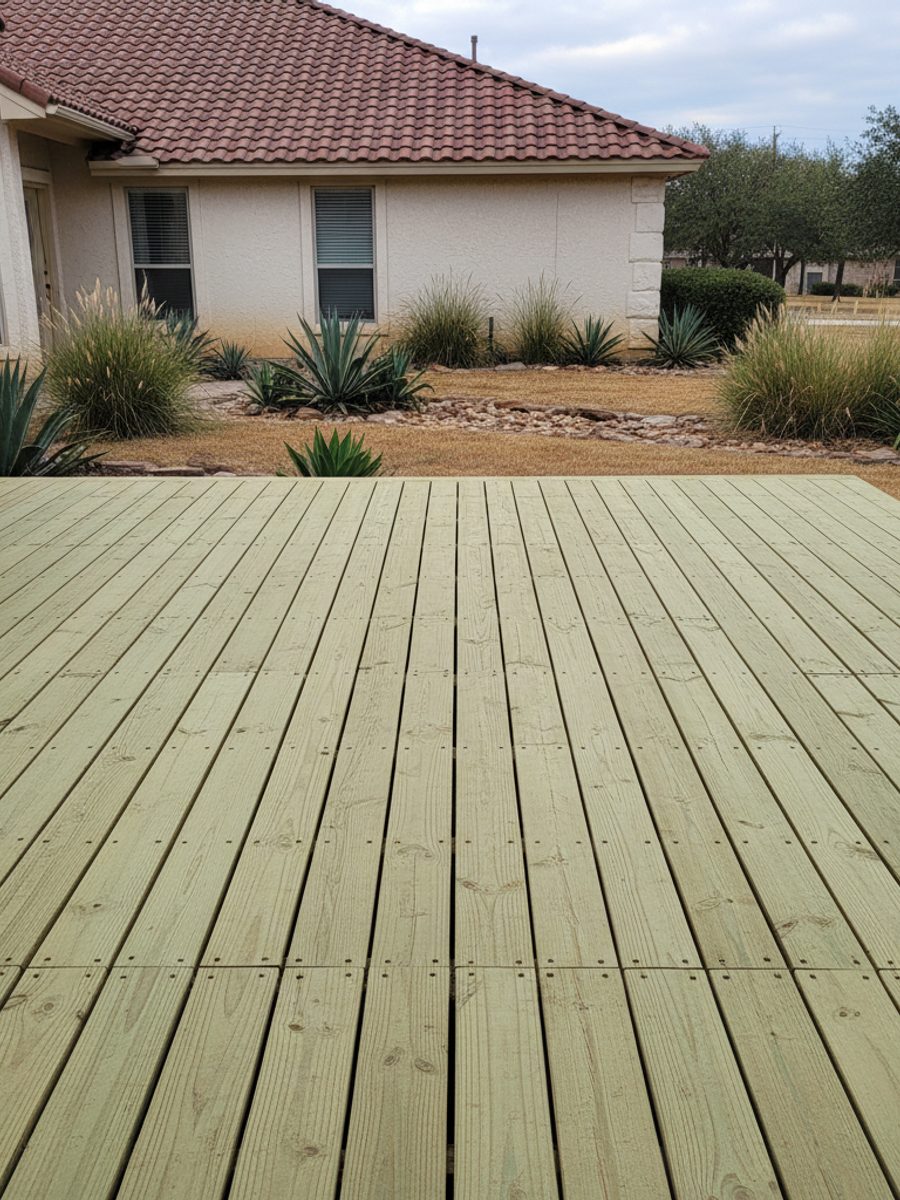
Anybody with a truck and a stack of pressure-treated 2x6s can call themselves a deck builder. El Paso has a lot of them right now, especially after a few years of people finally getting around to backyard projects they put off. Some of those crews are good. Some are gone by the time your railing starts wobbling in year two. Here's what separates the two, and what it actually takes to build a deck that holds up to this ground and this sun.
What El Paso's ground and climate do to a deck
The soil under most El Paso yards has a layer of caliche a foot or two down, a hardened crust of calcium carbonate that can feel like concrete when you hit it with a shovel. A footing that's supposed to go 12 inches deep sometimes has to be broken through another 6 to 8 inches of that stuff with a hand bar or an auger bit made for it. A builder who quotes your job without ever mentioning caliche either hasn't dug a footing here before or is planning to skip it and hope the hardpan itself holds the post.
Then there's the sun. Deck boards here can hit 150 to 160 degrees on a July afternoon. Composite decking expands and contracts with that heat more than most homeowners expect, which is why the gap between boards matters, usually 1/8 to 3/16 inch depending on the brand, so the boards have somewhere to move without buckling or popping fasteners. Wood does the same thing in reverse, drying out and cupping if it isn't sealed. A cedar or pressure-treated deck out here needs its first coat of sealer within the first year, and needs it reapplied every year or two, not every three or four like you'd get away with in a milder climate.
July and August bring the monsoon, short heavy downpours after months of nothing. Ground that's been baked hard all summer doesn't absorb water fast, so it sheets off. If the deck isn't graded to shed water away from the house, and the ledger board isn't flashed properly, you'll get water wicking into the rim joist and rotting it from the inside where you can't see it until the deck starts to sag.
The paperwork that tells you who you're actually hiring
In Texas, a general contractor doesn't need a state license to build a deck, which is exactly why so many unlicensed crews operate here. What you can and should ask for is proof of general liability insurance and workers' comp coverage, or a written statement that the crew is covered under an exempt sole proprietor policy. If someone falls off a ladder in your backyard and the builder has no coverage, that liability can land on you as the property owner.
A deck attached to your house, with footings and a structure, needs a building permit in the City of El Paso. If you're in Horizon City, Socorro, Vinton, Canutillo, or another unincorporated part of El Paso County, that permit runs through the county instead. Either way, expect at least two inspections: one after the footings are dug and before concrete goes in, and a framing inspection before the decking boards go down. A builder who tells you permits are a waste of time or money is telling you they don't want an inspector checking their footing depth or their ledger attachment. That's the opposite of reassuring.
If your neighborhood has an HOA, and a lot of the newer subdivisions on the east side and in the Upper Valley do, there's usually an architectural review step before the permit even gets filed. That can add a couple of weeks. A builder who's worked in your subdivision before will know that and build it into the timeline instead of surprising you with it.
Questions worth asking before you sign anything
- How is the ledger board attached to the house, and is it flashed? It should be lag-bolted or through-bolted, not just nailed, with metal flashing over it to keep water out of the rim joist.
- How deep are the footings going, and what happens if they hit caliche?
- What's the joist spacing? 16 inches on center is standard for most wood decking, but a lot of composite manufacturers require 12 inches on center to keep their warranty valid. Ask which one you're getting.
- What's the guardrail height and baluster spacing? Code calls for a minimum 36-inch guard height on the deck itself, with balusters spaced so a 4-inch sphere can't pass through. This is one of the most common things inspectors flag on a first pass.
- Who pulls the permit, you or them? It should be them. If a builder wants you to pull it yourself, that's often a sign they're trying to keep the job off the books.
What to walk away from
Walk away from a quote that comes in noticeably lower than everyone else's without an explanation. Cheap decks usually get cheap where you can't see it: undersized footings, screws instead of structural fasteners at the ledger, no flashing.
Walk away from anyone who wants the full payment up front, before materials are even ordered. A deposit is normal. Full payment before work starts is not.
Walk away from a verbal agreement with no written contract. The contract should spell out the materials, the footing depth, who's pulling the permit, and a payment schedule tied to actual progress, not just dates on a calendar.
And walk away from anybody who can't tell you, off the top of their head, roughly how deep a footing needs to go in your part of town, or what caliche is. That's not a trick question. It's the kind of thing you only know if you've actually dug footings in El Paso soil before.
Getting quotes that mean something
Get at least two or three quotes, and make sure they're pricing the same thing. A quote for pressure-treated pine framing with composite decking on top isn't comparable to one that's wood all the way through, even if the number looks similar. Ask each builder to walk you through footing depth, fastener type, and permit responsibility the same way, so you're actually comparing apples to apples instead of just comparing the bottom line.
A deck that's built right here should hold up through caliche digging, summer heat that would warp cheaper materials, and monsoon downpours that test every seam and joint. That's the standard we build to on our deck builder work at Oasis Deck, and it's the standard worth holding anyone you hire to, whether that ends up being us or somebody else.